Source five blade razor cartridge for Shaving, Body Care, and Home Use
Find 24 five blade razor cartridge options from verified Chinese manufacturers. Compare specifications like blade material, hardness, and packaging types for home or body shaving needs.
Key considerations
Products List




Comprehensive Sourcing Guide
Strategic Sourcing Guide for Five-Blade Razor Cartridges
The global market for personal care appliances continues to evolve, with the five-blade razor cartridge representing a significant segment driven by consumer demand for closer shaves and enhanced skin comfort. For B2B procurement professionals, navigating this category requires a disciplined approach that balances technical performance, regulatory compliance, and supply chain reliability. This guide synthesizes observed market data and technical attributes to provide a framework for sourcing high-quality five-blade razor cartridges. Buyers must distinguish between disposable and reusable variants, as the supply chain dynamics differ significantly between these product types. The following sections detail the critical dimensions of technical specification, compliance verification, cost analysis, and supplier evaluation necessary for successful procurement.
Technical Specifications and Product Variants
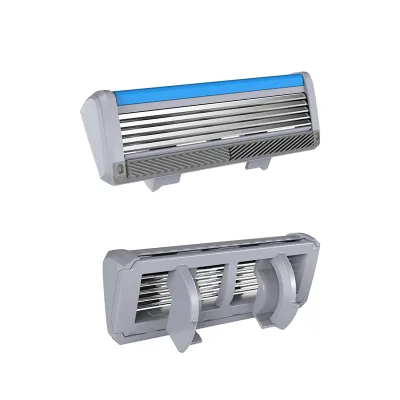
Understanding the physical and functional specifications of five-blade razor cartridges is the first step in defining procurement requirements. The market presents a diverse array of configurations, ranging from single-use disposable units to durable, reusable systems. Observed data indicates that product models vary in dimensions, with standard blade assemblies measuring approximately 137 mm by 42 mm or 144 mm by 42 mm. Some packaging standards suggest a size of 144.5 mm by 42 mm, highlighting the need for precise specification alignment during the ordering process.
The core functional attribute of these products is the blade configuration. A standard five-blade cartridge typically features five cutting edges paired with a single trimmer blade, designed to capture hair at different angles for a smoother finish. The material composition is critical; stainless steel is the predominant material cited for blade construction, often sourced from specific regions known for high-grade metallurgy, such as Sweden. The hardness of these blades is a vital performance metric, with observed ranges falling between 580 HV and 630 HV, ensuring durability and edge retention. Sharpness is another quantifiable attribute, with some market data indicating performance thresholds where sharpness is measured at less than 16 Newtons of force required for cutting.
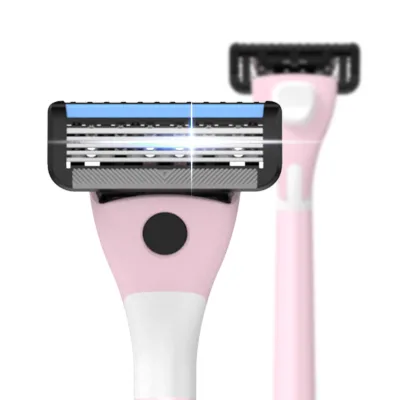
Assembly methods also vary by product type. While some units are designed for automatic assembly to ensure consistency, others may require manual integration. The physical form factor includes both folded and unfolded configurations, with some products marketed as "unfolded" for immediate use, while others are "folded" for compact storage or shipping. Weight is a minor but measurable factor, with individual units often weighing around 10 grams or 0.056 kg depending on the specific model and packaging. Buyers must verify whether the product is intended for body use or home use, as this influences the design of the handle interface and the blade guard.
Compliance, Certification, and Regulatory Standards
In the personal care sector, regulatory compliance is non-negotiable. Procurement teams must verify that suppliers adhere to international safety and quality standards. The observed market data references several key certifications, including CE, ISO9001, SGS, and FDA. These certifications indicate that the manufacturing processes and final products meet specific safety, quality management, and health requirements. Additionally, some listings mention HORS standards, which may relate to specific regional or industry-specific safety protocols.
When evaluating a supplier, buyers should request current certification documents rather than relying on general claims. The presence of ISO9001 suggests a commitment to quality management systems, while CE marking indicates conformity with health, safety, and environmental protection standards for products sold within the European Economic Area. FDA compliance is crucial for products intended for the North American market, ensuring that materials are safe for skin contact. It is important to note that not every listed product may possess all these certifications; verification is required on a per-supplier basis.
Furthermore, the origin of the product plays a role in regulatory compliance. Many manufacturers are located in China, with specific hubs in Ningbo and Shanghai. These regions have established export infrastructures, but buyers must ensure that the specific factory holds the necessary export licenses and that the products meet the destination country's import regulations. The "Export Market: Global" attribute suggests that many suppliers are accustomed to international trade, but the specific standards applicable to the buyer's target market must be confirmed before finalizing an order.
Cost Drivers and Pricing Dynamics
The pricing structure for five-blade razor cartridges is influenced by a complex interplay of factors, including material costs, manufacturing complexity, and order volume. The observed price range in the market spans from $0.04 to $28.00 USD, a wide variance that reflects differences in product quality, brand positioning, and packaging sophistication. The lower end of the spectrum typically corresponds to basic disposable models with minimal packaging, while the higher end may include premium reusable systems with advanced blade technology and branded packaging.
Material costs are a primary driver, particularly for stainless steel blades. The quality of the steel, such as Swedish stainless steel, commands a premium price compared to standard alloys. Additionally, the complexity of the blade assembly, involving five cutting edges and a trimmer, adds to the manufacturing cost. Packaging also significantly impacts the final price. Options range from simple polybags to more elaborate blister cards, hanging cards, and rigid boxes. The "Box" packaging option, for instance, suggests a higher value proposition and potentially higher unit cost compared to bulk polybagging.
Order volume is another critical cost determinant. The Minimum Order Quantity (MOQ) observed in the market ranges from 5 pieces to 200,000 pieces. Suppliers often offer tiered pricing structures where the unit cost decreases as the order volume increases. Buyers should be aware that small MOQs, such as 5 pieces, may result in higher per-unit costs due to setup and handling fees. Conversely, large volume orders can leverage economies of scale but require significant capital commitment and storage capacity. Customization options, such as ODM/OEM services, also add to the cost, as they involve tooling and design fees.
Typical Applications and Usage Scenarios
Five-blade razor cartridges are designed for specific applications, primarily centered around personal grooming and body care. The primary usage category is "for Home," indicating that these products are intended for domestic use rather than professional salon environments, although the distinction can sometimes blur. The "Body" usage attribute confirms that these cartridges are suitable for shaving various parts of the body, including the face, legs, and underarms.
The target demographic for these products is broad, encompassing "Adult" and "All Ages" groups. However, the "Unisex" attribute suggests that the design is gender-neutral, appealing to a wide consumer base. The "Disposable" attribute highlights a specific usage model where the cartridge is discarded after a certain number of uses, while "Non-Disposable" or "Re-Usable" variants are designed for long-term use with replaceable blades. This distinction is crucial for inventory management and customer retention strategies.
In terms of application, the "Five Edge Blades" configuration is optimized for close shaves with reduced skin irritation. The inclusion of a trimmer blade allows for precision grooming, making these cartridges suitable for detailed work. The "Automatic" assembly feature implies a user-friendly design where the cartridge snaps into place seamlessly, enhancing the user experience. Buyers should consider the specific needs of their target market when selecting between disposable and reusable models, as this decision impacts customer satisfaction and repeat purchase rates.
Supplier Evaluation and Verification
Selecting the right supplier is paramount to ensuring product quality and supply chain stability. The market data indicates that suppliers are primarily located in China, with key manufacturing hubs in Ningbo and Shanghai. When evaluating potential partners, buyers should verify the supplier's production capabilities, including their ability to handle ODM/OEM requests. The "ODM/OEM: Yes" attribute confirms that many suppliers offer custom design and manufacturing services, allowing buyers to create branded products.
Quality assurance is a critical evaluation criterion. Suppliers should demonstrate a commitment to high-quality standards, as indicated by the "Quality: High" attribute. Buyers should request samples to test the sharpness, hardness, and overall performance of the blades. The observed hardness range of 580 HV to 630 HV and sharpness of less than 16 N should be verified through independent testing. Additionally, the supplier's ability to maintain consistent quality across large production runs is essential.
Logistics and lead times are also important factors. The observed delivery time of 40 days suggests that buyers should plan their inventory well in advance to avoid stockouts. Suppliers with reliable logistics networks can ensure timely delivery, reducing the risk of supply chain disruptions. Buyers should also assess the supplier's flexibility in handling different packaging requirements, such as "5 PCS/ Bag, 1000 PCS/ CTN" or "24 PCS/ Hanging Card," to ensure that the final product meets retail standards.
Quality Control and Long-Term Procurement Considerations
Implementing a robust quality control (QC) process is essential for maintaining product integrity. Buyers should establish clear acceptance criteria based on the technical specifications, including blade dimensions, material hardness, and packaging integrity. Regular inspections during production and pre-shipment checks can help identify and rectify defects before they reach the market. The "Single package size" and "Single gross weight" data points provide benchmarks for verifying that the products meet the agreed-upon specifications.
Long-term procurement considerations involve building a sustainable relationship with suppliers. This includes negotiating favorable terms for repeat orders, securing consistent pricing, and ensuring that the supplier can scale production to meet growing demand. The "Repeat Usage: Re-Usable" attribute suggests that for certain product lines, the focus should be on durability and blade replacement systems, which can drive long-term customer loyalty.
Buyers should also consider the environmental impact of their procurement decisions. The "Disposable" nature of some products raises concerns about waste, while "Re-Usable" options offer a more sustainable alternative. Evaluating the packaging materials, such as the availability of "Blister Card" or "Hanging Card" options, can help minimize environmental footprint. Finally, maintaining open communication with suppliers regarding market trends and technological advancements will ensure that the procurement strategy remains competitive and responsive to changing consumer preferences.
Conclusion
Sourcing five-blade razor cartridges requires a comprehensive understanding of technical specifications, regulatory requirements, and market dynamics. By carefully evaluating product attributes, verifying certifications, and selecting reliable suppliers, buyers can secure high-quality products that meet the needs of their customers. The wide range of options available, from disposable to reusable models, allows for strategic flexibility in meeting diverse market demands. With a disciplined approach to quality control and long-term planning, procurement professionals can navigate the complexities of this category and achieve successful outcomes.
FAQs
What are the standard dimensions for five blade razor cartridges?
Standard dimensions vary, with observed sizes including 137 by 42 mm, 144 by 42 mm, and 144.5 by 42 mm. Buyers must verify specific model requirements before ordering to ensure compatibility with existing handles.
Can I customize five blade razor cartridges with my own brand?
Yes, customization is available through ODM and OEM services for most suppliers. This allows for branded packaging and design modifications, though it may affect lead times and minimum order quantities.
What certifications should I look for in five blade razor cartridge manufacturers?
Reputable suppliers often hold CE, ISO9001, SGS, and FDA certifications. These standards indicate compliance with international safety and quality management protocols, which are essential for global market distribution.
How does the MOQ affect the unit price of five blade razor cartridges?
The minimum order quantity ranges from 5 pieces to 200,000 pieces, directly influencing the unit cost. Higher volumes typically reduce the price per unit, while small orders may incur higher setup fees.
What is the typical lead time for five blade razor cartridge orders?
The standard delivery time is approximately 40 days from order confirmation. Buyers should plan inventory accordingly to avoid stockouts, as this duration accounts for production and logistics processing.
Which materials are used for the blades in five blade razor cartridges?
Blades are typically constructed from stainless steel, with some suppliers specifying Swedish stainless steel for enhanced durability. The hardness usually ranges between 580 HV and 630 HV to ensure sharpness and longevity.
Are five blade razor cartridges available in disposable or reusable versions?
Both disposable and reusable variants are available in the market. Some models are designed for single use, while others feature re-usable handles with replaceable cartridges for long-term use.